Kiedy usuwac karty zamiast kupowac?
Usuwanie Uderzen i Obron jest prawie zawsze priorytetem, zwlaszcza w Akcie 1-2. Mniejsza talia dobiera kluczowe karty czesciej.
Kiedy kupowac, kiedy usuwac karty i kiedy ulepszac zamiast odpoczywac — decyzje sklepu i ogniska, ktore wygrywaja partie.
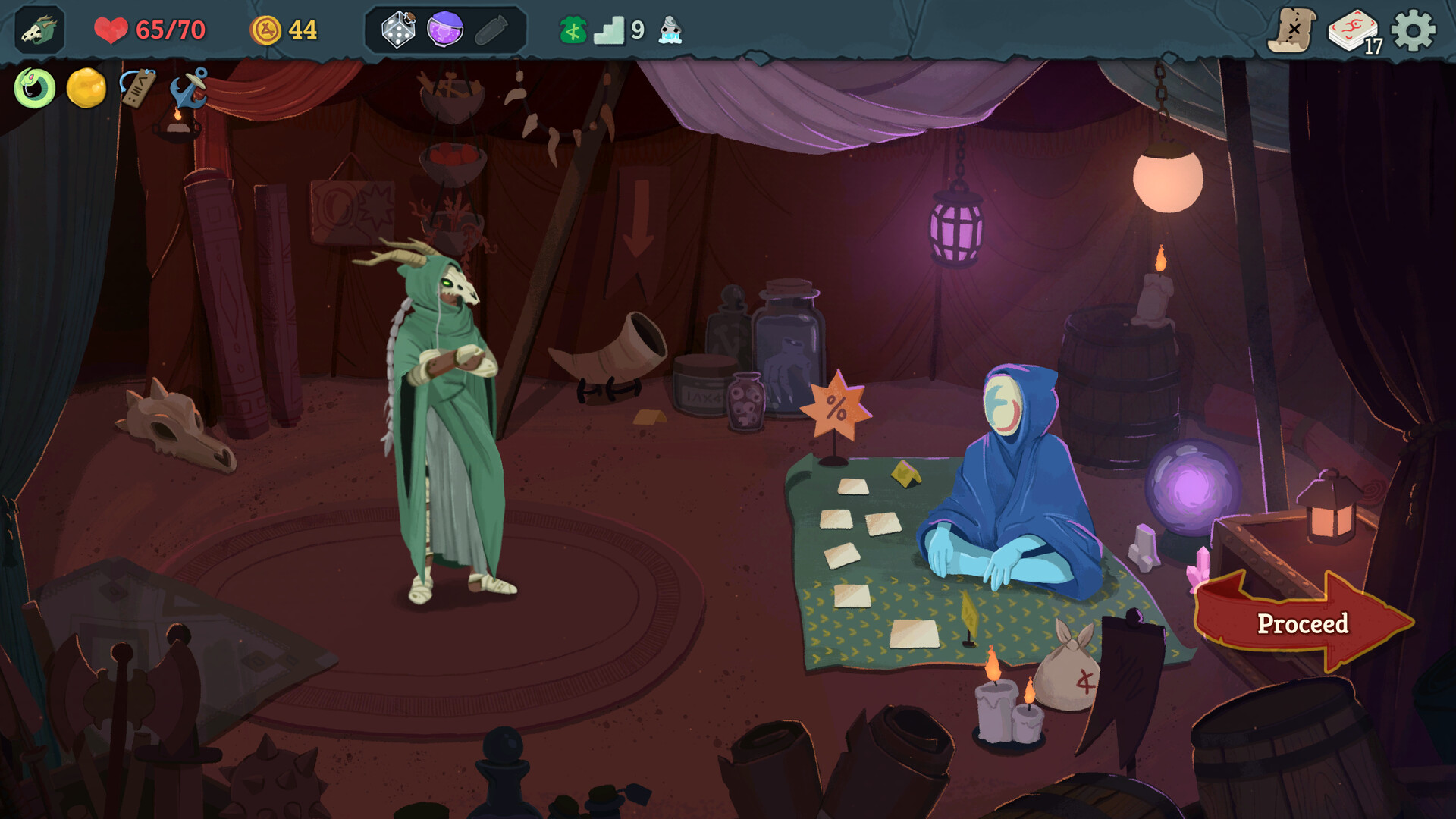
Decyzje przy sklepie i ognisku czesto decyduja o wyniku partii bardziej niz wybor kart z nagrod po walce.
Uwaga weryfikacyjna
Na podstawie potwierdzonych mechanik i konsensusu spolecznosci.
Szybkie podsumowanie
Ten przewodnik skupia się na jednym konkretnym pytaniu, abyś mógł z niego korzystać w trakcie runu, zamiast przekopywać się przez ogólny przegląd.
Jeśli odpowiedź zależy od mechaniki, systemu postaci lub niedawnej łatki, powiązane linki pokażą, co sprawdzić dalej.
Używaj jako szybkiej referencji w trakcie runu, nie jako encyklopedii.
Jeśli decyzja dotyczy mechaniki lub systemu postaci, sprawdź też powiązane strony.
Zmiany balansu mogą wpłynąć na rekomendacje — sprawdź strony aktualizacji.
The first card removal costs 75 Gold, and each additional removal adds 25 Gold (100, 125, 150, and so on). Despite the rising cost, removal is almost always the highest-impact gold you can spend.
A 20-card deck with 5 Strikes draws its key cards about 75% of the time. Remove just 2 Strikes and that 18-card deck draws key cards roughly 83% of the time. That consistency gain is worth more than most cards you could buy.
Buy a card when it directly solves your biggest weakness and nothing else in the shop or upcoming rewards will fix the problem. Missing AoE, missing scaling, or missing block generation are all valid reasons to buy instead of remove.
Build-defining rares like (Ironclad), (Ironclad), (Silent), or (Necrobinder) are almost always worth buying when they appear. These cards warp your entire run in the right direction.
discounts all future shop purchases and is the best long-term shop relic. Cheap repeatable card removal becomes absurd when combined with Membership Card. adds more choices to every shop, making your gold more efficient.
Orange Pellets removes all debuffs when you play an Attack, Skill, and Power in the same turn. On characters that naturally play all three card types, this effect solves Afflictions, Weak, Frail, and most other negative effects in a single turn.
Path toward shops when you have 150 or more Gold. Skip shops when you have less than 75 Gold because you cannot afford even a single removal. Save gold for specific relics or cards when your deck needs one particular piece to function.
Gold is a resource, not a score. Ending a run with unspent gold is worse than spending it on the right removal or upgrade at the right time.
Upgrade when you are above 60% HP and you have a card that dramatically improves when upgraded. Rest when you are below 40% HP or you have no meaningful upgrade targets. Before a boss fight, upgrade if one upgraded card changes the matchup; rest if survival is uncertain.
The best upgrades in the game change how a card functions, not just its numbers. gains an extra turn of Intangible, adds more Shivs, and pushes Forge scaling harder than a raw damage bump alone.
Ironclad: (stronger long-fight scaling), (extra damage and Vulnerable duration), (better X-cost payoff). Silent: (extra turn of Intangible), (more Shivs), (cleaner loop turns). Defect: (extra Frost Orbs), (removes Exhaust). Necrobinder: (increased passive damage per Soul), (better permanent scaling). Regent: (higher permanent scaling), (higher Forge multiplier).
Więcej porad i przewodników
FAQ
Usuwanie Uderzen i Obron jest prawie zawsze priorytetem, zwlaszcza w Akcie 1-2. Mniejsza talia dobiera kluczowe karty czesciej.
Sources
Mega Crit early access launch post
OfficialOfficial launch article for the current early access build.
Official Steam FAQ
OfficialPinned by Mega Crit. Confirms the launch time, price, platforms, Steam Deck support, and early access range.
SlashSkill best builds for every character
AuthorityCross-character archetype overview with deck construction principles.
Slay the Spire Wiki
AuthorityCommunity wiki with card, relic, and event data.