Jaki build jest najlatwiejszy dla poczatkujacego?
Skalowanie Sily Pancernika. Demon Form, Inflame, Brand i karta finiszowa jak Whirlwind — dziala po prostu.
Przeglad buildow wszystkich pieciu postaci: najlepsze archetypy, kluczowe karty i kiedy je budowac.
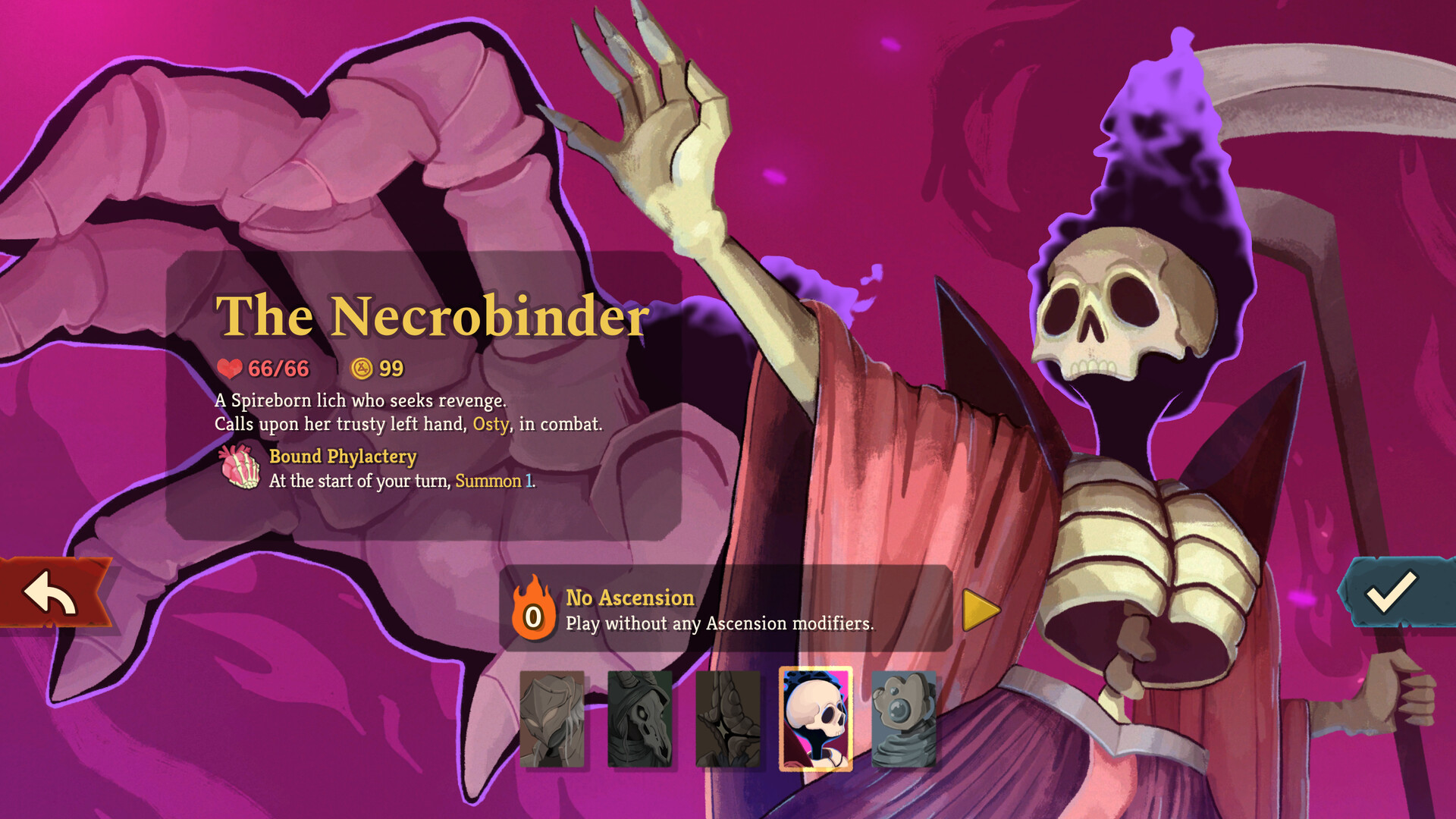
Kazda postac w Slay the Spire 2 ma wiele sciezek buildow. Ten poradnik podsumowuje najlepsze archetypy kazdej postaci.
Uwaga weryfikacyjna
Na podstawie konsensusu spolecznosci z pierwszego tygodnia wczesnego dostepu.
Szybkie podsumowanie
Ten przewodnik skupia się na jednym konkretnym pytaniu, abyś mógł z niego korzystać w trakcie runu, zamiast przekopywać się przez ogólny przegląd.
Jeśli odpowiedź zależy od mechaniki, systemu postaci lub niedawnej łatki, powiązane linki pokażą, co sprawdzić dalej.
Używaj jako szybkiej referencji w trakcie runu, nie jako encyklopedii.
Jeśli decyzja dotyczy mechaniki lub systemu postaci, sprawdź też powiązane strony.
Zmiany balansu mogą wpłynąć na rekomendacje — sprawdź strony aktualizacji.
Strength Scaling is the most beginner-friendly Ironclad build. (2 energy, Power) gives +3 Strength every turn. and are the easiest current-card-pool ways to keep the stat climbing, while and turn stacked Strength into fast lethal damage. Target 25 to 30 cards and aggressively remove Strikes after Act 1.
Body Slam Block uses (1 energy, Power) to retain Block between turns, then (1 energy, Attack) deals damage equal to your Block total. and generate Block while thinning your deck. adds passive damage every time you gain Block.
Exhaust Engine is the most complex path. The holy trinity is (all Skills cost 0 but Exhaust), (draw a card whenever you Exhaust), and (gain Block whenever you Exhaust). Cycle through your entire deck each turn, generating massive Block and card advantage. (0 energy, 17 AoE damage) is the new finisher that replaced Dead Branch from the original game.
Self-Damage uses (1 energy, Power) to convert HP loss into Strength. (1 energy, Attack) deals 6 AoE damage and costs 6 HP, triggering Rupture for free Strength. High risk, high reward, and best with 's 6 HP post-combat healing as a safety net.
Sly Discard is the strongest Silent archetype and has the highest damage ceiling of any character in the game. Sly cards play themselves for free when discarded from your hand before the end of your turn. (1 energy, Skill) discards your entire hand and draws 5 new cards, triggering every Sly card in your hand for free. and maintain cycling momentum. Target 20 to 25 cards with heavy Sly density.
Poison uses , , and to stack poison, then leans on and duplicated skill turns from to accelerate the damage clock. This is the most beginner-friendly Silent build because it does not require precise discard sequencing. Surviving the first few turns is the main challenge.
Shiv builds use , , and to generate and buff Shivs. Accuracy increases all Shiv damage, and stacking multiple copies creates exponential scaling. Viable but generally lower ceiling than Sly or Poison.
Claw 0-Cost Spam is the comeback story of the sequel. (0 energy, Attack) gains +2 permanent damage every time any Claw is played. , , and cycle through your deck. (2 energy, Attack) retrieves every 0-cost card from your discard pile, re-enabling Claw loops. Keep deck size tight because every non-zero-cost card dilutes your Claw draws.
Orb Scaling still works but permanent Focus stacking from the original game has been removed. Dark Orbs now scale passively over time in their slot instead of scaling with Focus. Plasma Orbs solve energy constraints. remains the primary Focus generator, and channels Frost Orbs for passive Block generation. The aggressive Lightning path leans on , , and , while the defensive Frost path uses and .
Soul Cycle with is the most consistent Necrobinder build. Haunt (1 energy, Power) deals 6 damage to all enemies every time you play a Soul card. Souls are 0-cost tokens that draw a card and Exhaust themselves. With two copies of Haunt and a deck of 15 to 20 cards, you achieve a pseudo-infinite loop where playing Souls draws more Souls, each dealing 12 unavoidable damage. (1 energy, Attack) gains permanent +3 to 4 damage per play, scaling across your entire run.
Doom Stacking uses , , and to apply Doom to enemies. When an enemy's HP drops to or below their total Doom stacks, they die instantly. This build excels against high-HP targets but requires careful Doom tracking. and convert Doom triggers into defensive Block.
Osty Minion builds focus on keeping your companion alive with and while it deals passive damage. Less consistent than Soul Cycle but provides a defensive fallback. All Necrobinder builds share one rule: keep your deck small. Quest Cards and filler cards destroy your cycling speed.
Star Burst uses and (Power) to deal 3 damage every time you spend or gain a Star. Stars are a persistent second currency that carries between turns and combats. (0 energy) cycles your Stars for damage, and converts Stars into Energy for explosive turns. deals 7 damage per Star and can reach 49 or more AoE damage. is a mandatory relic that amplifies Star generation.
Forge Sovereign Blade uses the Forge mechanic to permanently upgrade , a Retained attack card that scales its damage across the entire run. and support this path. The key is a lean deck that draws Sovereign Blade consistently every turn.
The critical mistake is splitting between Stars and Forge. A 50/50 split means your deck excels at nothing. Commit fully to one path by Act 1 and draft only cards that support it. {{relic:Mini Regent}} (relic) provides Strength scaling from Star spends and pairs well with the Stars path.
Ironclad and Defect Orb builds work best at 25 to 30 cards. Silent Sly wants 20 to 25 cards. Necrobinder Soul Cycle needs the tightest deck at 15 to 20 cards. Regent depends on path: Stars can handle 25 cards, Forge wants fewer than 20.
Remove Strikes aggressively in every character. The biggest drafting mistake is taking every interesting card you see. A focused 20-card deck consistently outperforms a 35-card deck with better individual cards.
Więcej porad i przewodników
FAQ
Skalowanie Sily Pancernika. Demon Form, Inflame, Brand i karta finiszowa jak Whirlwind — dziala po prostu.
Sources
GameRant Ironclad cards and combos
AuthoritySpecific Ironclad card combo breakdowns with damage numbers.
Mobalytics Defect guide
AuthorityCommunity-maintained Defect build guide with Claw and Orb archetype strategies.
Mobalytics Ironclad guide
AuthorityDetailed Ironclad archetype analysis including Strength, Block, and Exhaust builds.
Mobalytics Necrobinder guide
AuthorityDetailed Necrobinder archetype analysis including Doom, Soul, and Osty builds.
Mobalytics Regent guide
AuthorityDetailed Regent archetype analysis including Stars and Forge builds.
Mobalytics Silent guide
AuthorityDetailed Silent archetype analysis including Sly, Poison, and Shiv builds.
SlashSkill best builds for every character
AuthorityCross-character archetype overview with deck construction principles.
TheGamer Silent beginner guide
AuthoritySilent archetype overview with card recommendations for new players.