Volver a guías
EstrategiaVerificado March 8, 2026

Estrategia de tienda y hoguera

La eliminación de cartas es la compra de tienda de mayor valor en la mayoría de partidas. Esta guía cubre precios de tienda, prioridad de eliminación, objetivos de mejora en hoguera y gestión de oro para los cinco personajes.

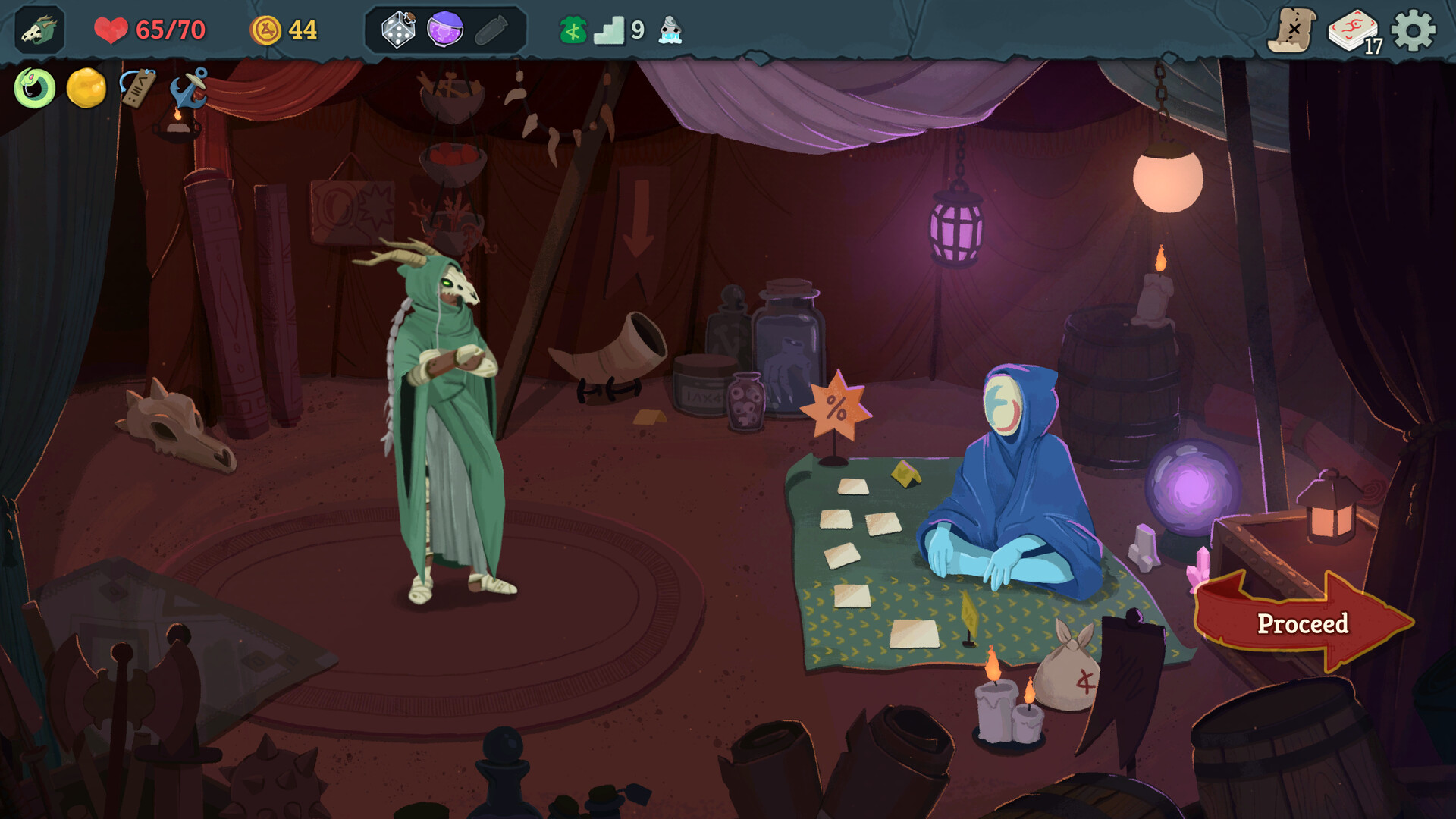
Slay the Spire 2 shop scene with merchant and card removal options
The shop is where card removal, relic purchases, and gold management decisions happen.

El oro y las hogueras son dos de los recursos no relacionados con el combate más importantes en Slay the Spire 2. Gastarlos bien puede ser la diferencia entre un Acto 3 limpio y un mazo hinchado que roba cartas muertas un turno sí y otro también.

El principio fundamental es simple: la eliminación suele ser más valiosa que añadir cartas, y las mejoras suelen ser más valiosas que descansar. Todo lo demás depende del contexto.

Nota de verificación

Datos de precios confirmados en múltiples guías independientes. Prioridades de mejora verificadas con Mobalytics, SlashSkill y el consenso de la comunidad en discusiones de Steam.

Resumen rápido

Esta guía se centra en una pregunta práctica concreta, para que puedas consultarla durante una partida sin tener que leer un resumen general.

Si la respuesta depende de una mecánica, un sistema de personaje o un parche reciente, los enlaces relacionados te indican qué consultar a continuación.

Úsala como referencia rápida durante la partida, no como enciclopedia.

Si la decisión implica una mecánica o un sistema de personaje, consulta también las páginas relacionadas.

Los cambios de equilibrio pueden alterar las recomendaciones: comprueba las páginas de actualizaciones.

Card removal is the best shop purchase

The first card removal costs 75 Gold, and each additional removal adds 25 Gold (100, 125, 150, and so on). Despite the rising cost, removal is almost always the highest-impact gold you can spend.

A 20-card deck with 5 Strikes draws its key cards about 75% of the time. Remove just 2 Strikes and that 18-card deck draws key cards roughly 83% of the time. That consistency gain is worth more than most cards you could buy.

  • Remove Strikes before Defends in most cases.
  • Remove Affliction-affected cards when possible.
  • Stop removing only when your deck has fewer than 3 basic cards left.

When to buy cards instead of removing

Buy a card when it directly solves your biggest weakness and nothing else in the shop or upcoming rewards will fix the problem. Missing AoE, missing scaling, or missing block generation are all valid reasons to buy instead of remove.

Build-defining rares like (Ironclad), (Ironclad), (Silent), or (Necrobinder) are almost always worth buying when they appear. These cards warp your entire run in the right direction.

Shop relics worth buying

discounts all future shop purchases and is the best long-term shop relic. Cheap repeatable card removal becomes absurd when combined with Membership Card. adds more choices to every shop, making your gold more efficient.

Orange Pellets removes all debuffs when you play an Attack, Skill, and Power in the same turn. On characters that naturally play all three card types, this effect solves Afflictions, Weak, Frail, and most other negative effects in a single turn.

Gold management principles

Path toward shops when you have 150 or more Gold. Skip shops when you have less than 75 Gold because you cannot afford even a single removal. Save gold for specific relics or cards when your deck needs one particular piece to function.

Gold is a resource, not a score. Ending a run with unspent gold is worse than spending it on the right removal or upgrade at the right time.

Campfire: upgrade vs rest

Upgrade when you are above 60% HP and you have a card that dramatically improves when upgraded. Rest when you are below 40% HP or you have no meaningful upgrade targets. Before a boss fight, upgrade if one upgraded card changes the matchup; rest if survival is uncertain.

The best upgrades in the game change how a card functions, not just its numbers. gains an extra turn of Intangible, adds more Shivs, and pushes Forge scaling harder than a raw damage bump alone.

Top upgrade targets by character

Ironclad: (stronger long-fight scaling), (extra damage and Vulnerable duration), (better X-cost payoff). Silent: (extra turn of Intangible), (more Shivs), (cleaner loop turns). Defect: (extra Frost Orbs), (removes Exhaust). Necrobinder: (increased passive damage per Soul), (better permanent scaling). Regent: (higher permanent scaling), (higher Forge multiplier).

FAQ

¿Debería eliminar siempre los Golpes antes de las Defensas?

Casi siempre. Los Golpes hacen menos daño que cualquier carta que añadas a tu mazo, mientras que las Defensas al menos proporcionan bloqueo funcional. La principal excepción es cuando tu mazo ya tiene suficiente daño y necesita desesperadamente mejor defensa.

¿Vale la pena comprar la Tarjeta de Socio pronto?

Sí, si planeas visitar tiendas en los Actos 2 y 3. El descuento se acumula en cada compra futura, incluyendo eliminaciones y mejoras de cartas a 75 de oro cada una.

¿Cuándo debería descansar en vez de mejorar antes de un jefe?

Descansa cuando tus PV estén por debajo del 40 % y el combate contra el jefe requiera sobrevivir varios turnos antes de que tu mazo arranque. Un 30 % extra de PV máximos puede significar sobrevivir un turno más, lo cual a menudo vale más que una sola mejora.